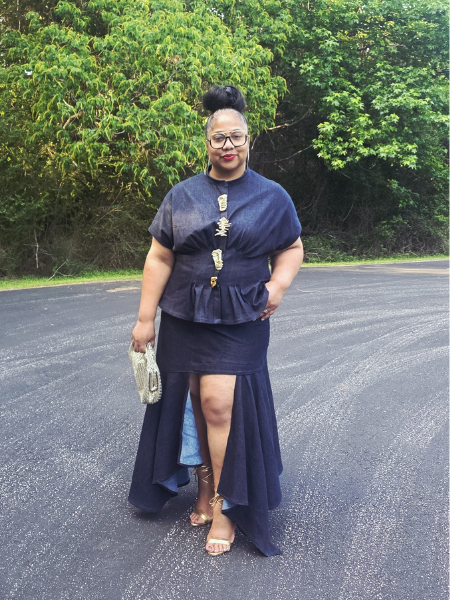
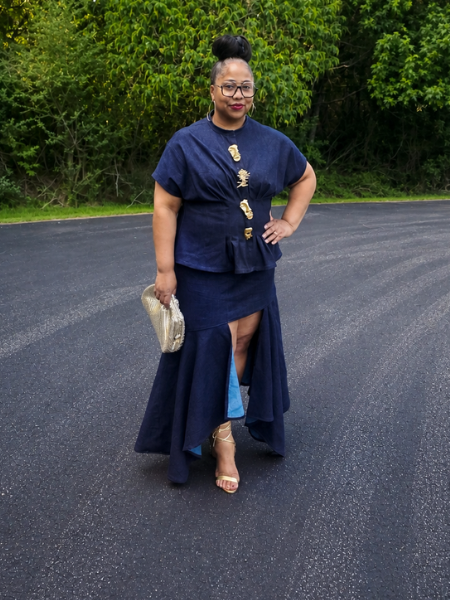
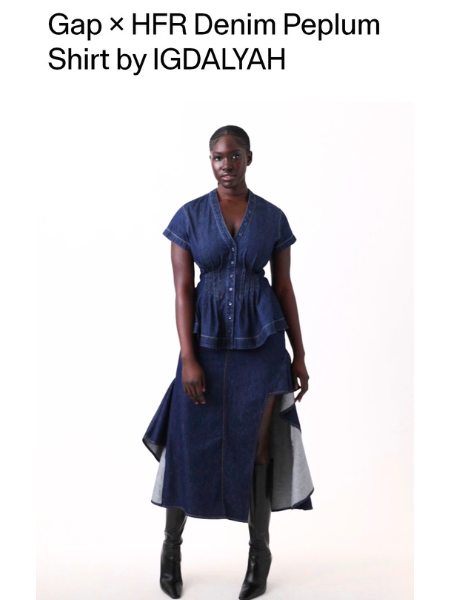
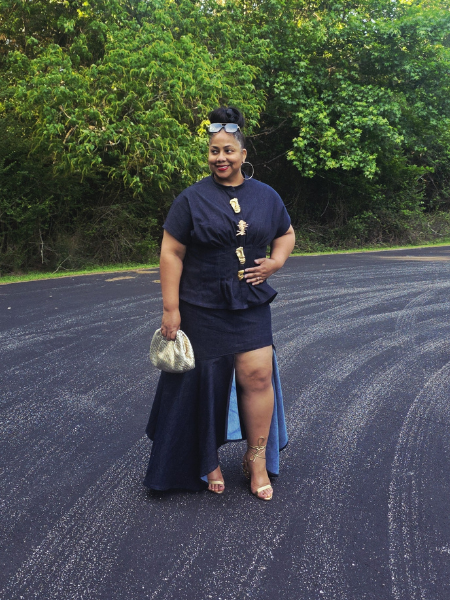
Ruqayyah transforms Cone Mills Navy Stretch 8oz Denim into a statement look that blends structure and everyday wearability. Through a creative pattern mash-up of Simplicity 3070 and Vogue 1814, she designed a show-stopping skirt, while Vogue 1874 became her blouse. This two-piece set shows that denim can move beyond casual wear into elevated fashion. Projects like this are a powerful reminder that sewing allows us to create high-end, designer-inspired clothing for our own lives. Shop the fabric and notions here.
Why did you select the Cone Mills Navy Stretch 8oz Denim, versus other denim weights?
I wanted a fabric that was light enough to make a top, but still structured enough for a skirt. The 8 oz felt like the perfect in-between. I also liked the fact that it had just enough stretch to make the garment comfortable to wear.
Did you prewash your denim, and if so, what method did you use?
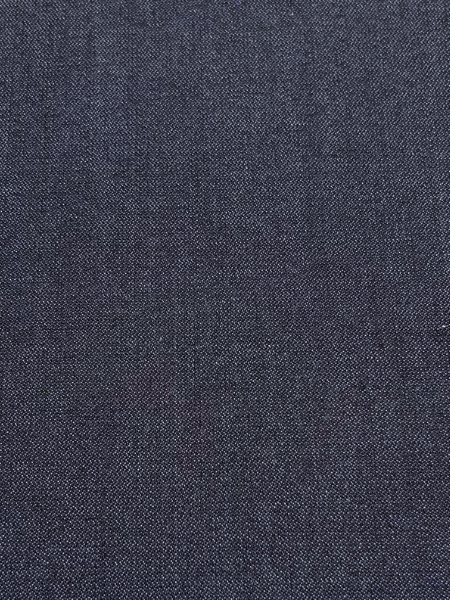
I don’t usually prewash fabric—with the exception of denim, especially dark denim. I washed it by itself in hot water using regular detergent. I did not notice a significant amount of shrinkage in the fabric.
Do you have any other go-to prep steps you always follow with denim?
I have a large heat press that I use for my business. After washing and drying, I use it to quickly press out wrinkles and set the center fold line.
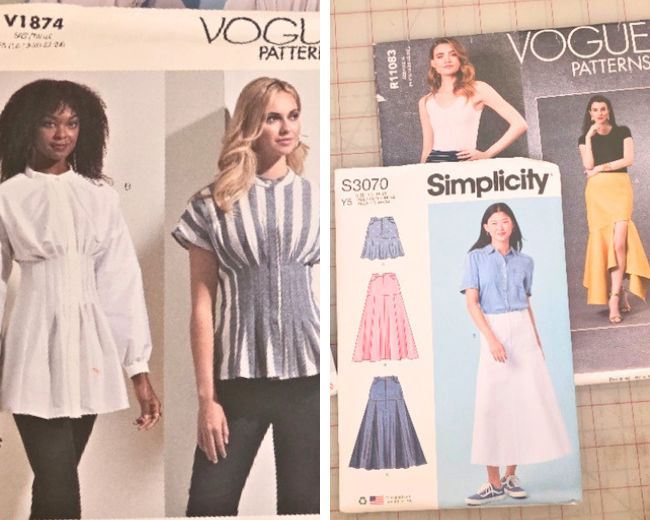
Combining three patterns is such a creative approach. You selected Vogue 1874, Simplicity 3070 (yoke), and Vogue 1814 (skirt). What inspired you to mix these designs together?
The Gap had a collaboration with designers through Harlem’s Fashion Row. There were two pieces I didn’t get a chance to buy because they sold out so quickly, so I wanted to recreate—or at least get close to—the aesthetic of those looks. The top reminded me of Vogue 1874. The skirt wasn’t an exact match, but using the yoke from Simplicity 3070 with the flounce from Vogue 1814 felt like a natural combination.
How did you blend Simplicity 3070 and Vogue 1814 to make sure everything flowed seamlessly?
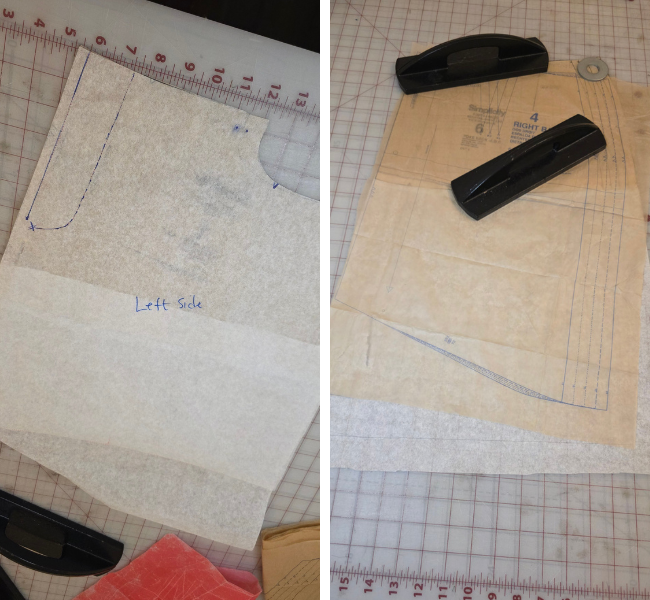
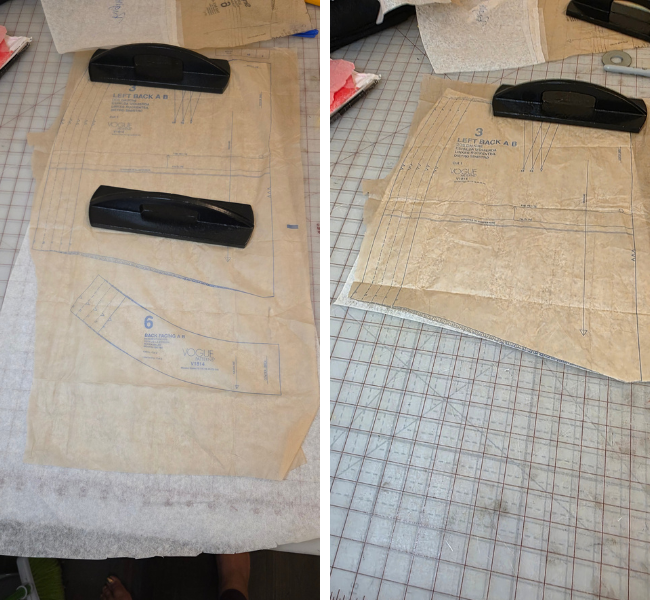
The planning for this was honestly very rough and didn’t follow any real rules. I used tissue paper to lay the Simplicity yoke over the Vogue 1814 pattern. I mainly needed the hemline from Vogue so that when I attached the flounce, the curve would match.
Did you need to make any fit adjustments to the blouse or skirt?
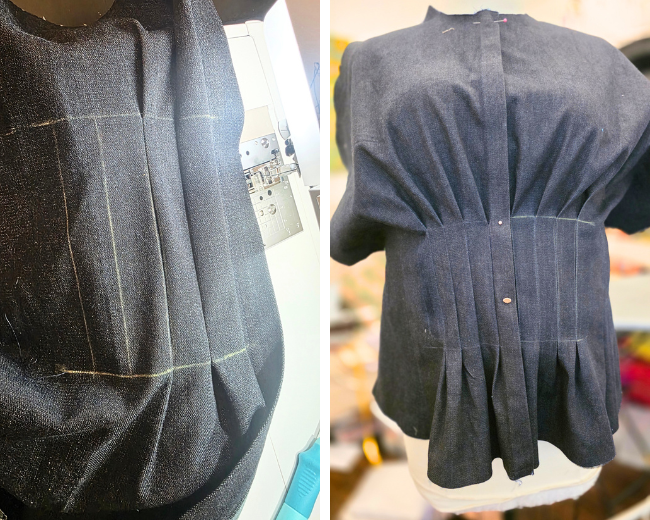
With the stretch of the denim, I adjusted the top by about 2 inches along the side seams. For the skirt, it involved a lot of basting and trying it on to get the fit right at the hips and waist. Since the side seams didn’t align exactly how I wanted after tracing between patterns, I brought the sides in more. I also used about a 1” seam allowance to account for the stretch. I had to shave about an inch from the side seams when transitioning from the Vogue Patterns V1814 pattern to the Simplicity 3070 pattern, grading in from the waist down to the bottom of the pocket lining to help refine the fit and shape. I didn’t make any other adjustments to the blouse—I followed the instructions as written. I’m sure there was probably an easier or more technical way to do it, but this approach worked well for me during the construction process.
What needle, thread, and stitch settings worked best for this 8oz stretch denim?
I used a standard size 11 needle. For most seams, I stitched at a 2.5 length, and for topstitching, I increased it to 3.5.
When attaching the Simplicity 3070 yoke to the Vogue 1814 skirt, did you have to adjust the waist seam or shaping to get a smooth transition?
Yes. I’ll be honest—the initial tracing for the waist and side seams was pretty rough. I even used scrap fabric to create a quick muslin to make sure the adjustments worked smoothly.
Denim can add bulk quickly. What techniques did you use to keep seams manageable, especially around the collar, center front placket, yoke, and waist?
The pattern suggested turning the hem under twice, but I knew that would be too bulky with denim. Instead, I serged all the edges and turned the hem up once to keep everything flat and clean.
With denim, structure can be tricky.
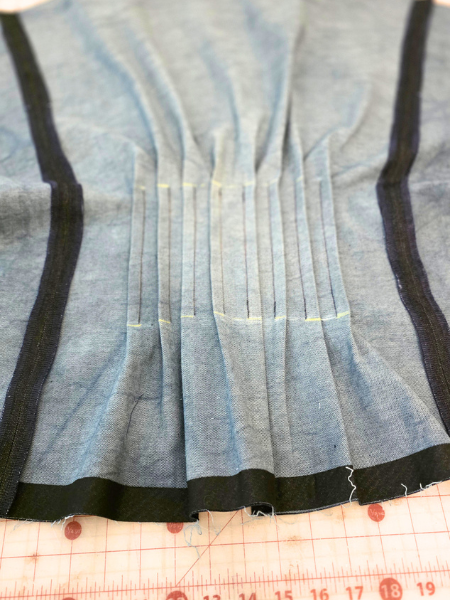
What interfacing or stabilizing techniques did you use to support the shape without making it too stiff?
This was my biggest concern because of the stretch. I didn’t want the hems to lose shape, but I also didn’t want them too stiff. I used 1” fusible seam tape along the armholes and bottom hem, and bias fusible along the neckline to help it hold its shape while adding the collar. For everything else—the collar, front plackets, and waistband—I used a black woven fusible interfacing.
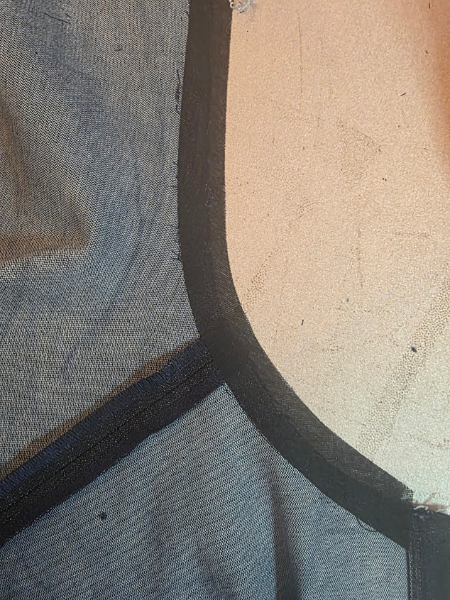
What topstitching techniques did you use for that classic denim look?
I didn’t want the topstitching to be the focal point, so I kept it subtle. I used standard thread with a 3.5 stitch length in a matching dark navy. Were there any tricky moments during construction where you had to solve problems?
Were there any tricky moments during construction where you had to solve problems?
The trickiest parts were adding the seam tape to the top and adjusting the upper portion of the skirt to match the flounce. It was a lot of trial and error—definitely not following strict instructions, just figuring it out as I went. Lots of basting and trying things on to get the layers right.
Looking back, is there anything you would do differently with this pattern combination?
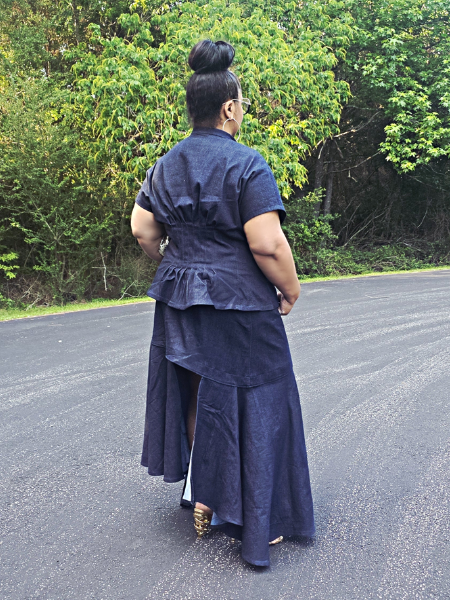
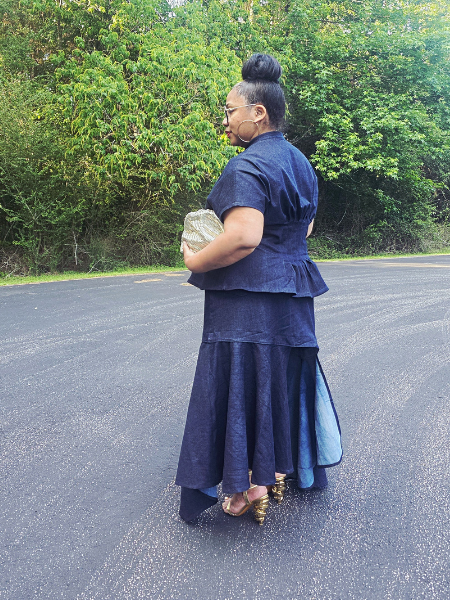
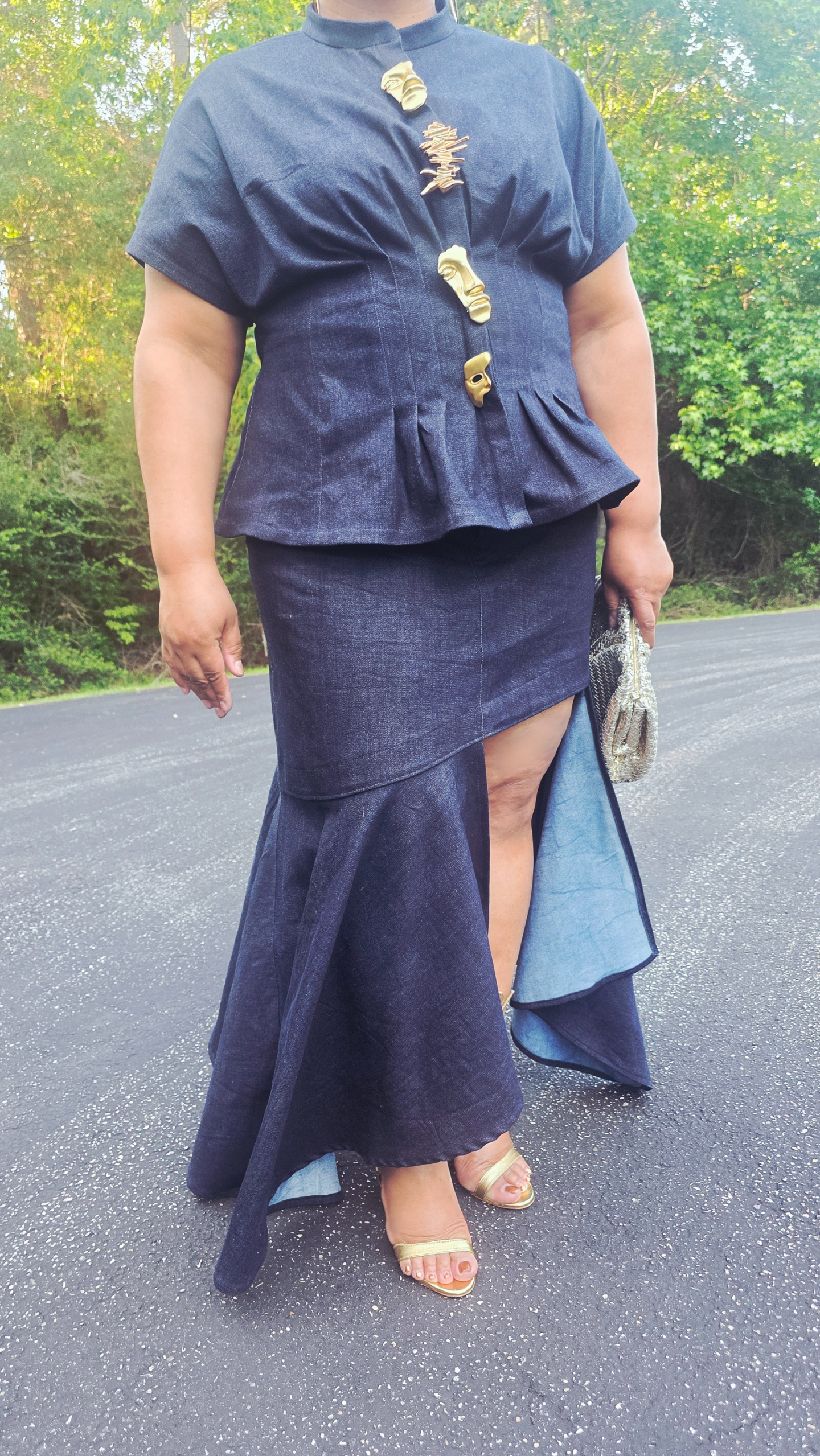
One thing that I did not realize on the Vogue Pattern V1814 was that the bottom flounce area was not connected at the center back seam, which created an opening at both the front and back. I’m still a little undecided on whether I completely love that detail or not, but overall, I really love the look of the top and skirt styled together as a set.
Can you share a few ways to style this look?
The top is easy—it can be styled with black slacks or khaki trousers for a completely different look. I added gold brooches for a little pop against the dark denim, but it also looks great without them for a cleaner feel. For the skirt, I plan to style it more casually next time—maybe with a sweatshirt and sneakers. It’s a great option for something like my kids’ basketball games or a relaxed outing.
Do you want to add anything else?
Overall, the denim was very easy to work with and has a beautiful hand feel. The stretch is definitely something to consider when designing. I would also recommend washing it once or twice beforehand to minimize dye transfer before construction.